tjuḻpu paṉangka nyinapai tjuṯa

ground birds

luuṉpa
ruuḻpa
red-backed kingfisher (Todiramphus pyrrhopygia)

id:9811 order:322

Tjuḻpu luuṉpa wangkanyangkala kulilpai, “Munta kuwari kuḻiringanyi.”
When we hear the red-backed kingfisher’s call we think, “Oh, it’s going to get hot now.”
titiṟara
rainbow bee-eater (Merops ornatus)

id:9812 order:324

Titiṟara putingka wangkapai tjaḻa puḻkangka.
The rainbow bee-eater gives it’s call in the bush where there’s lots of honey ants.
kirkitjaṟutjaṟu
banded lapwing (plover) (Vanellus tricolor)

id:9813 order:325

Kirkitjaṟutjaṟungku ngampu uṟilta tjunkula ila ngaṟala anga-pikaringkupai.
The banded lapwing lays its eggs outside on the ground and protects them by walking around close by.
kaḻaya
tjakipiri
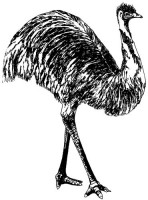
emu (Dromaius novaehollandiae)

id:9814 order:326

Wati tjuṯangku kaḻaya ngalya-tukulmankunyangka kuliṟa paṯaṟa wakalpai.
When the men hear emus coming toward them making a booming sound they wait and spear them.
akalpa
tjampuṉiny
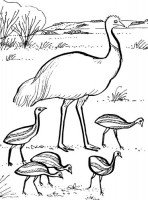
emu chick

id:9815 order:328

Kaḻayangku akalpa tjuṯa aṯunytju kanyini.
The father emu is taking care of his chicks.
kipaṟa
parulpa
bush turkey, bustard (Ardeotis australis)

id:9816 order:330

Kipaṟangku kuḻunypa kutjara kutju kanyilpai.
The bush turkey only has two little ones (at a time).